Purchase knows one number. Stores knows a different one. Accounts finds out at month end that both were wrong.... Read More ERP isn’t about buying more software — it’s about all of it finally referring to the same set of records.
Before anything else, we work out which of these you actually are — because a mill and a garment distributor need almost nothing in common beyond the accounting module.
Job cards, machine-wise output, wastage against norm, and true cost per job rather than an overall margin you can’t break down.
Stock split across locations with transfer control, party-wise rates and schemes, and receivables ageing that updates itself.
Central rate control with branch-level operation, inter-branch transfer requests, and one consolidated view above it all.
Seasonal or batch-driven production where yield and by-products carry real value and have to be accounted separately.
Different shape entirely — the modules that matter are billing, receivables, payroll and utilisation rather than godowns.
In most businesses without an ERP the honest answer is a day or two — someone has to ask three departments, wait for replies and assemble it in Excel. By the time it’s ready it describes a situation that has already moved. An ERP’s real value isn’t the software; it’s that the answer becomes a screen instead of a project.
What ERP actually removes from your week:
An ERP’s real job is not to add software to your business. It is to remove the human glue holding disconnected systems together — the people who spend half their day reconciling two versions of the same number. When that glue is code instead of effort, those people can actually do their jobs.
Department by department, we document how work actually flows today
What you need now, what comes in phase two, and how they connect
One or two modules live at a time, so the business keeps running throughout
Masters and opening balances brought in, every department trained properly
One entry updates everywhere it should, without re-typing. A purchase receipt updates stock, accounts payable, and the godown — simultaneously. Nobody manually transfers data between departments.
Multi-godown, batch and expiry tracking, barcode entry, and reorder alerts. Stock is always current.
Purchase, discount and payment limits enforced by the system. Nothing moves without the right sign-off.
Correct tax handling built in. E-invoicing and e-way bill generation without separate tools or manual entries.
Every edit logged with user, time and previous value. Full accountability without paper trails.
Built around the decisions your management actually makes — not generic reports nobody reads.
After a requirement session you get a fixed written quote — not an hourly estimate that drifts. Pricing shown is a starting point; the exact number depends on modules, users and data complexity.
The essential spine of the business. Purchase, sales, inventory and accounts working together.
Operations plus the departments around them. The tier most growing businesses land on.
Full coverage for complex, multi-department operations with advanced analytics and field access.
The software is rarely why an ERP doesn’t stick. It’s usually rolled out to every department at once, staff aren’t trained properly, opening data is dirty, and within two months people quietly return to their old Excel files while entering things into the ERP as a formality.
We roll out in phases, clean the data before it goes in, and train the actual users — because a system nobody trusts is worse than no system, since now you’re paying for both.
Manufacturers, trading houses, mills and multi-branch retail operations across Punjab and other parts of India — most replacing a mix of accounting software, Excel and a departmental tool that never spoke to the others.
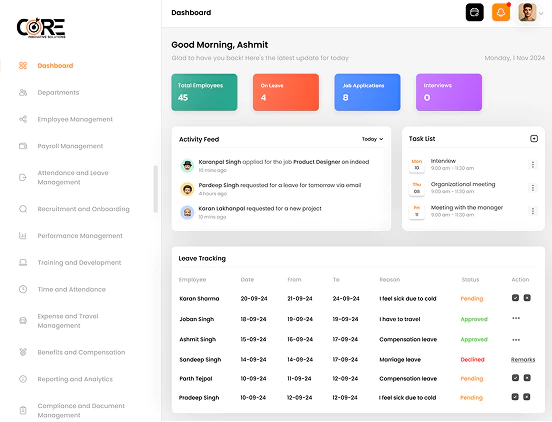
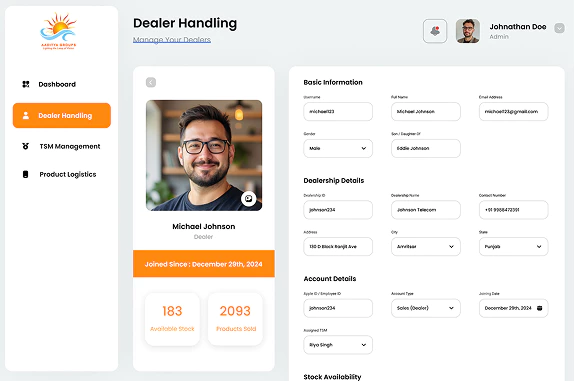
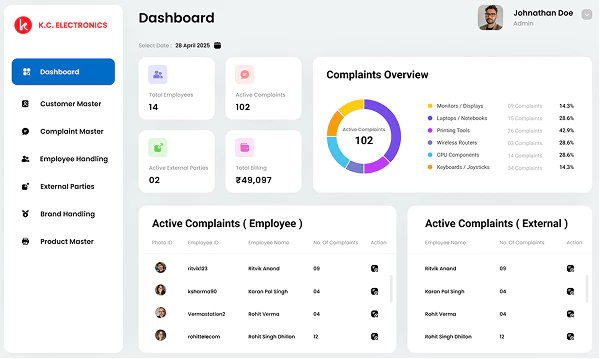
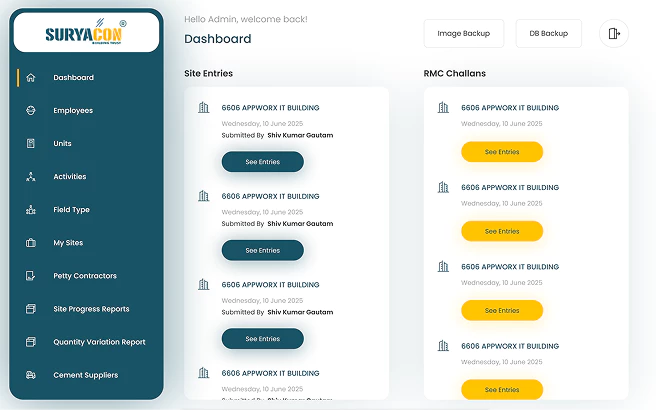
If your requirement doesn’t fit the ERP shape — something more specific to your process or industry.
View ServiceThe sales side, standalone or as an ERP module. Leads, follow-ups, quotations and customer history.
View ServicePeople and salary, integrated with ERP or running separately. Attendance, leaves, payslips and compliance.
View ServiceCounter billing feeding directly into the same stock and accounts, so the day-end reconciles itself.
View Service14+ years and 300+ clients later, the reason businesses keep coming back is the same: we study the process first, deliver in stages, and don’t disappear after launch.
The questions below come up in almost every first ERP conversation. If yours isn’t here, just ask — the first call is always free.
That’s usually where your ERP should start. That conversation is free, and it usually takes less than 30 minutes.
Book a Free ERP Requirement Session